
Five Discoveries That Changed How We See T. rex
Scientists once pictured a slow, tail-dragging monster, and today they think it was hot-blooded and maybe feathery.
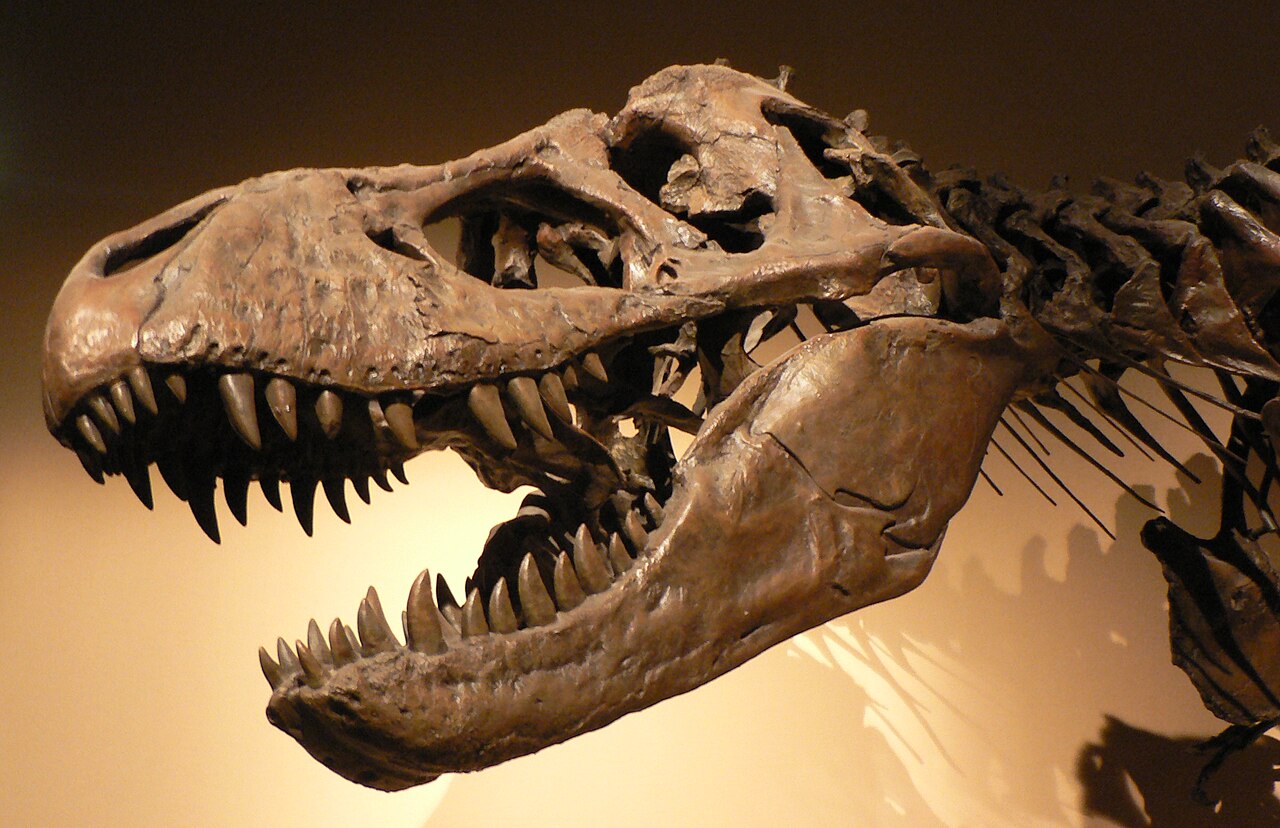
No dinosaur sparks the imagination like Tyrannosaurus rex. Since it was named in 1905, the meat-eater from the Cretaceous period has been the subject of awe, movies and years of study. Scientists have asked what it ate, how fast it walked, how warm its body was, what its social life looked like and what covered its body.
Cassius Morrison, a paleontologist at University College London, told Smithsonian magazine that in the early 20th century people imagined a savage world of slow dinosaurs in constant battles. T. rex was once pictured as a slow, tail-dragging monster in the swamps. Today it is understood as a warm-blooded and possibly feathery hunter that played a key part in its ecosystem. It fed on young and injured plant-eaters, and it also cleaned up the bodies of adult Triceratops and Edmontosaurus that were too big to hunt. This changed bit by bit as new discoveries came in. One of the five findings in the magazine's list is about the arms.
The tiny arms of T. rex were a mystery from the start. The 1905 paper that named the dinosaur noted how small its arms were. They would not have helped catch prey. One scientist suggested that they might help one T. rex hold on to another while mating, but nobody knew for sure. The small arms became both a puzzle and a joke.
Scientists first thought T. rex had three fingers on each arm, like earlier hunters such as Allosaurus, because they had no fossil of its hand. After a close relative, Gorgosaurus, was found in Canada with two claws, experts decided T. rex must have had two fingers too. A T. rex arm fossil found in 1988 confirmed it.
Small arms also make sense for an animal with a huge head full of muscle. A study of theropod arms published in May concluded that the arms were a trade-off. Big meat-eating dinosaurs such as tyrannosaurs caught prey and tore apart carcasses with their mouths. To use clawed arms, they would have had to run straight into their prey without being able to see what they were doing. Smaller arms left more room for neck muscles that could support the head.
About this story
Source: Smithsonian. Spotted a mistake? Tell us.
More in Nature
Across the U.S., Removing Old Dams Is Helping Fish Swim Home
More than 2,300 dams have been taken out since 1912, and fish such as herring are returning in the Northeast.

A Tiny Swimming Hunter From the Jurassic Helps Explain How Mammals Evolved
The 165-million-year-old fossil of Megacauda sungei has a soft palate that lets an animal swallow and breathe.

Europe's New Sentinel-3C Satellite Sends Back Its First Images of Earth
Two weeks after launch, the satellite showed the snowy Alps, frozen Arctic islands and turquoise Caribbean waters.