
NASA Satellites Show Australia's Red Outback Covered in Wildflowers
Heavy rain has turned a dry region of Western Australia into a colorful carpet of blooms.
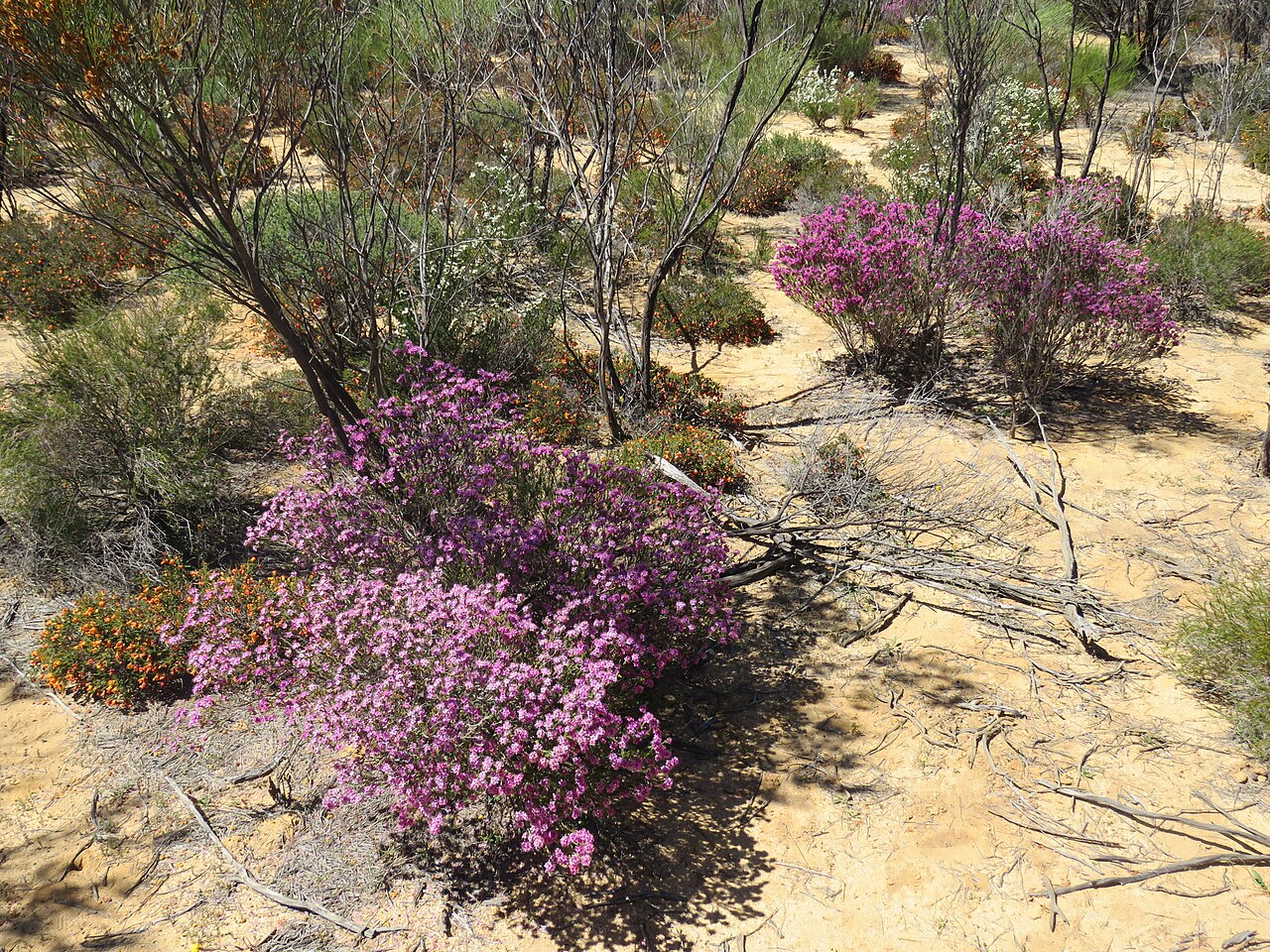
A huge burst of wildflowers has turned a normally dry, rust-colored part of Western Australia into a patchwork of green and bright blooms. The cause was months of unusually wet weather, which woke up seeds that had been sleeping in the soil. By late winter in the Southern Hemisphere in 2026, large parts of the region's dry shrubland were covered in flowers. Local experts think it could be the best wildflower season the area has seen in nearly 20 years.
NASA satellite images show how much the land changed in just one year. They were taken by an instrument on the Landsat 8 satellite, which NASA runs with the US Geological Survey. The pictures show the same area in late August 2025 and late August 2026. The place is in the Murchison region, about 600 kilometers (370 miles) north of Perth. It is a remote area where sheep and cattle graze, and tough plants that can live with little rain usually cover it, including grasses, saltbush and mulga, a slow-growing evergreen tree. Wildflowers appear from time to time, but how many there are depends on how much rain falls.
The 2026 display came from a series of cold fronts that brought moisture. Australia's Bureau of Meteorology said June had more rain than average and August was much wetter than normal. That let seeds that had been inactive in the dry soil start to grow.
The flowers even reached the grounds of a radio astronomy observatory run by CSIRO, Australia's national science agency. The Murchison Radio-astronomy Observatory, also known as Inyarrimanha Ilgari Bundara, studies the universe with radio signals. Several threatened plant species were among the flowers, and the observatory has helped keep track of those vulnerable plants on land once used for grazing livestock.
About this story
Source: ScienceDaily. Spotted a mistake? Tell us.
More in Nature
Across the U.S., Removing Old Dams Is Helping Fish Swim Home
More than 2,300 dams have been taken out since 1912, and fish such as herring are returning in the Northeast.

A Tiny Swimming Hunter From the Jurassic Helps Explain How Mammals Evolved
The 165-million-year-old fossil of Megacauda sungei has a soft palate that lets an animal swallow and breathe.
Europe's New Sentinel-3C Satellite Sends Back Its First Images of Earth
Two weeks after launch, the satellite showed the snowy Alps, frozen Arctic islands and turquoise Caribbean waters.