
Scientists Name a New Golden Coral After Tolkien's Elvish Language
The bright yellow, tree-shaped coral off Costa Rica was so unusual that it needed its own new family.
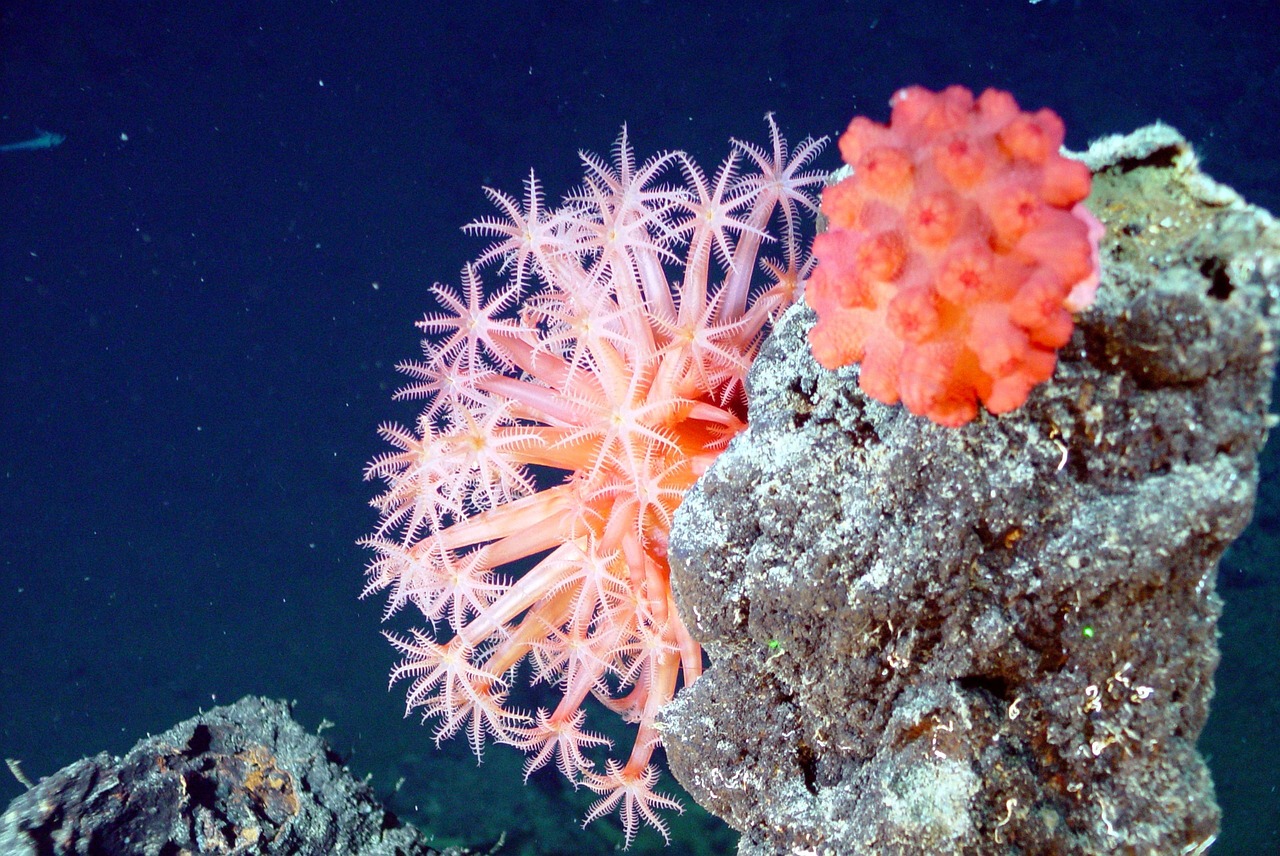
Scientists exploring underwater mountains off Costa Rica have found a coral unlike any known one. Its genes and body shape were so different that researchers created an entirely new family to classify it. The bright yellow coral has branches that look like a tree. It lives between 360 and 529 meters below the surface of the Pacific Ocean, and some colonies grow taller than a meter. The findings were reported in the journal ZooKeys.
Researchers collected the specimens with a remotely operated vehicle named SuBastian during expeditions in 2019 and 2023. The research ships Falkor and Falkor (too), which belong to the Schmidt Ocean Institute, carried them. They explored seamounts, which are underwater mountains, near Isla del Coco and along Costa Rica's Pacific coast.
The coral was especially common on rocky ledges where brittle stars, a type of sea creature related to starfish, covered nearly every surface. Against that glittering background, the yellow branches looked like glowing trees among stars. That scene helped inspire the name. The new genus is called Laurinque, from a word meaning "golden tree" in Quenya, the Elvish language that J.R.R. Tolkien invented for The Lord of the Rings. The species name, elenya, means "of the stars" in the same language and refers to the many brittle stars around the coral. The researchers described the scene as an almost mystical Elvish landscape on the deep ocean floor.
Finding where the coral fits on the tree of life was harder than expected. The scientists first sequenced three genes commonly used to classify corals, but each gene pointed to a different, unrelated family. Because the results disagreed, they used a method called phylogenomics, which compares hundreds of genes at once. That showed the coral does not belong to any known coral family. Its closest relatives are in a family called Eunicellidae, but it is different enough that the researchers created a new family, called Laurinqueidae.
Dr. Odalisca Breedy of the Universidad de Costa Rica, the lead researcher, said she first saw the octocoral garden in 2019 and was impressed by the beauty of the landscape.
About this story
Source: ScienceDaily. Spotted a mistake? Tell us.
More in Nature

Across the U.S., Removing Old Dams Is Helping Fish Swim Home
More than 2,300 dams have been taken out since 1912, and fish such as herring are returning in the Northeast.

A Tiny Swimming Hunter From the Jurassic Helps Explain How Mammals Evolved
The 165-million-year-old fossil of Megacauda sungei has a soft palate that lets an animal swallow and breathe.

Europe's New Sentinel-3C Satellite Sends Back Its First Images of Earth
Two weeks after launch, the satellite showed the snowy Alps, frozen Arctic islands and turquoise Caribbean waters.