
Why a Mushroom Disease Has Been Hard to Stop for 100 Years
University of Florida scientists found it involves more than 17 kinds of harmful bacteria, not just one.
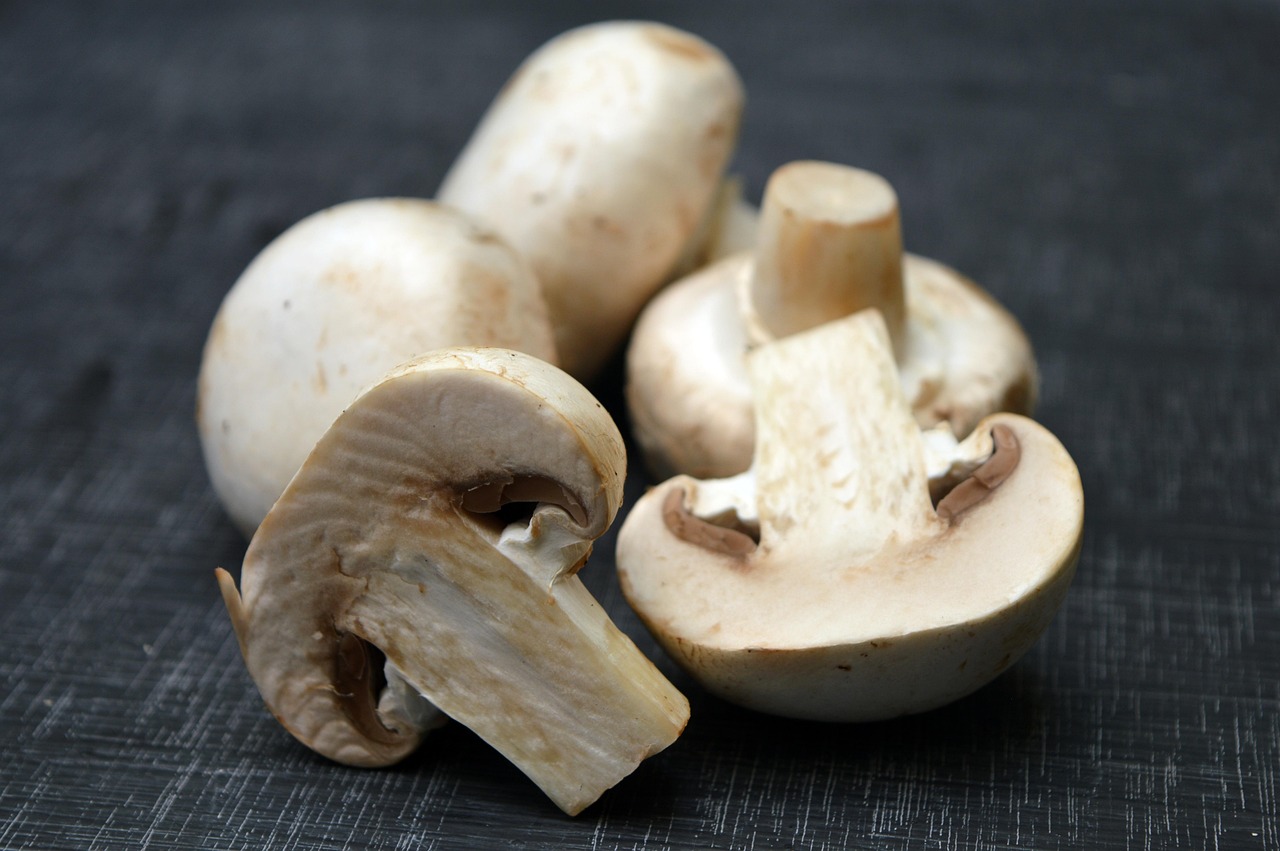
A disease that has troubled white button mushroom farmers for more than 100 years turns out to be more complicated than anyone thought. Researchers at the University of Florida found that it involves many different kinds of harmful bacteria instead of a single one. That could explain why the disease has been so hard to control, and it may lead to better ways to protect mushroom crops.
The disease is called bacterial blotch. It causes brown or yellow patches on mushrooms, which spoils how they look and lowers their value. It can also reduce how many mushrooms a farm harvests and shorten how long they stay fresh, which makes it expensive for mushroom farms across the United States. Sometimes the marks appear only after the mushrooms have been shipped to grocery stores or bought by shoppers, which makes it even harder for growers to keep their quality steady.
White button mushrooms are an important specialty crop. They are used in salads, appetizers and everyday meals. For many years, scientists mostly linked bacterial blotch to one disease-causing bacterium. The new study, from the University of Florida's Institute of Food and Agricultural Sciences, shows it is a much bigger group. These germs grow well in the humid indoor rooms where commercial mushrooms are grown. Because several species may cause the same disease, treatments aimed at only one may not be enough.
Samuel Martins, an assistant professor of plant pathology who helped with the study, said that for years the industry has struggled with treatments that give uneven results. He said a separate $7 million grant from the U.S. Department of Agriculture, shared by Penn State, the University of Delaware and the University of Florida, is paying for work on advanced tests and sustainable solutions for mushroom farms across the country.
To find out what was causing the disease, the team collected sick mushrooms from several farms in the southern United States. Using DNA sequencing and other methods, they found more than 17 species of bacteria.
About this story
Source: ScienceDaily. Spotted a mistake? Tell us.
More in Nature

Across the U.S., Removing Old Dams Is Helping Fish Swim Home
More than 2,300 dams have been taken out since 1912, and fish such as herring are returning in the Northeast.

A Tiny Swimming Hunter From the Jurassic Helps Explain How Mammals Evolved
The 165-million-year-old fossil of Megacauda sungei has a soft palate that lets an animal swallow and breathe.

Europe's New Sentinel-3C Satellite Sends Back Its First Images of Earth
Two weeks after launch, the satellite showed the snowy Alps, frozen Arctic islands and turquoise Caribbean waters.