
How to Watch the Orionid Meteor Shower This Week
The shower peaks around October 21-22, and Space.com says the best time is between 2 a.m. and dawn.
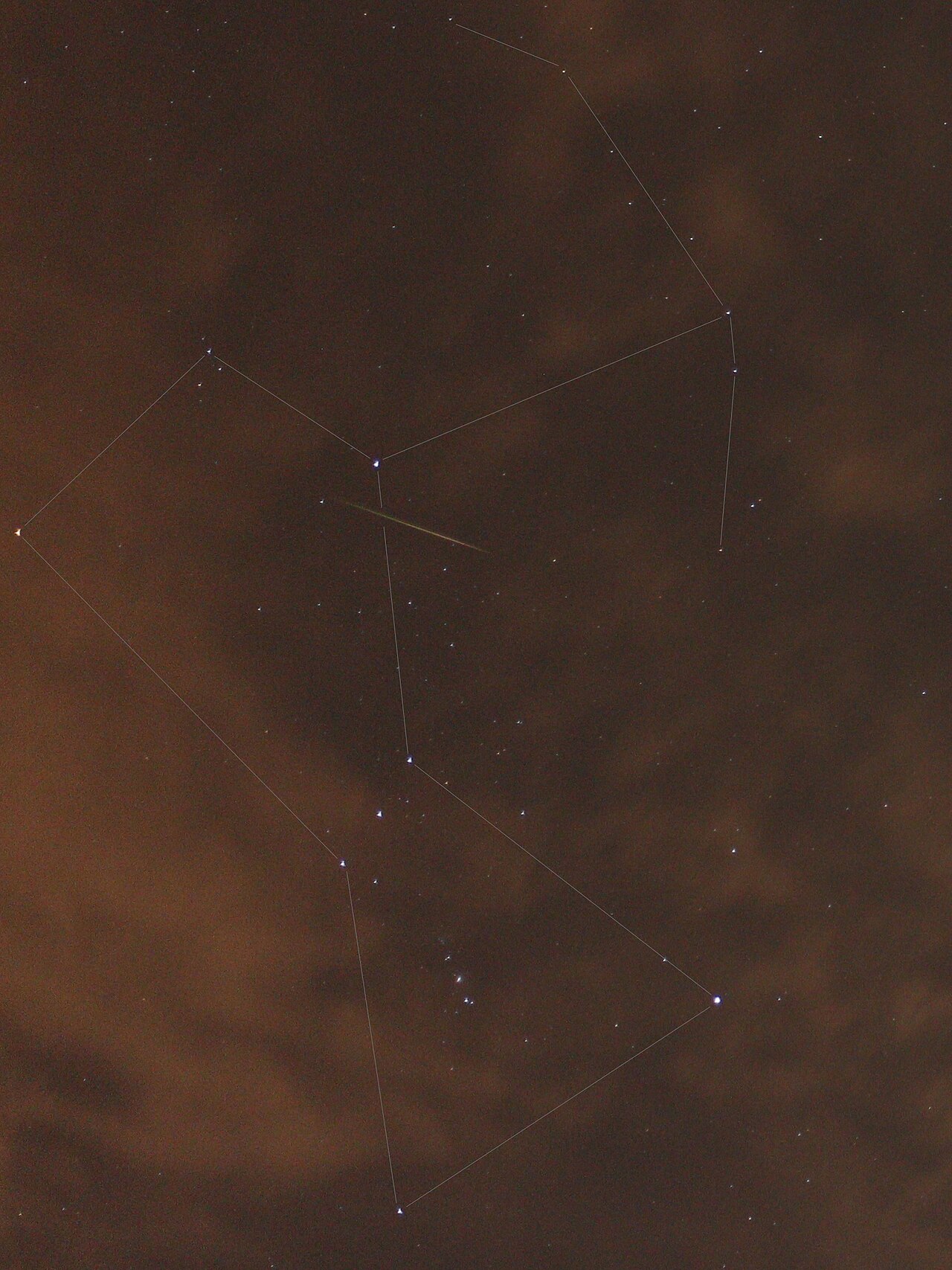
The Orionid meteor shower reaches its peak around October 21 and 22. Space.com says it comes between the summer's Perseids and December's Geminids, which is the year's most active shower.
The Orionids get their name from the area in the sky where these meteors appear to come from, which is close to the raised club of Orion, located slightly above and to the left of the red star Betelgeuse. In early autumn Orion does not fully rise above the eastern horizon until after 11 p.m. local daylight time. The best plan is to wait until about 2 a.m., when Orion is well above the horizon. You can see Orion at its peak in the southern sky around 5 a.m. right before the sun comes up, which is when it looks the clearest.
Orionid meteors tend to be faint, so city lights can wash them out. If you can, go to a safe, dark place in the countryside. Lie back in a reclining chair or sleeping bag, give your eyes time to adjust, and look overhead and toward the south.
What about the moon? A full moon comes on October 25 and 26, but there is a good stretch of dark sky for several mornings before then. On October 21 and 22 the waxing gibbous moon will be among the faint stars of Capricornus and will set shortly after 2 a.m. That leaves about three and a half hours of dark sky before dawn, and one observer may see 15 to 20 Orionids an hour.
Where do the meteors come from? They come from Halley's Comet, the same comet behind May's Eta Aquarids. Meteoroids are tiny pieces left behind by a comet. When a comet gets close to the sun, frozen material on its surface turns straight into gas. The comet leaves dust along its path, and the pieces are small and brittle, like cigar ash. Comets formed about 4.6 billion years ago with the sun and planets and have changed little, so they are like time capsules from the solar system's childhood. Each October and May, Earth passes close to Halley's path. Dust hits our atmosphere at about 41 miles (66 km) per second and lights up as the streaks we call "shooting stars."
More in Science
Ancient Japanese Populations Changed Differently After a Huge Volcanic Eruption
A new study led by Lund University finds that people in prehistoric Japan were affected in different ways after a volcano erupted about 7,300 years ago.

Mantis Shrimp Eyes Contain Pigments That Switch Back and Forth Like Light Switches
Scientists found that some of the animal's vision pigments see red light that few animals can detect.

A Study of 38,467 Songs Finds Lyrics Have Become Less Emotional
Michigan State University researchers looked at songs from 230 artists between 1947 and 2024.