
NASA Shares a 3D View of Comet 67P's Two-Lobed Nucleus
A special stereo picture from the Rosetta spacecraft shows the odd, double-shaped center of a comet.
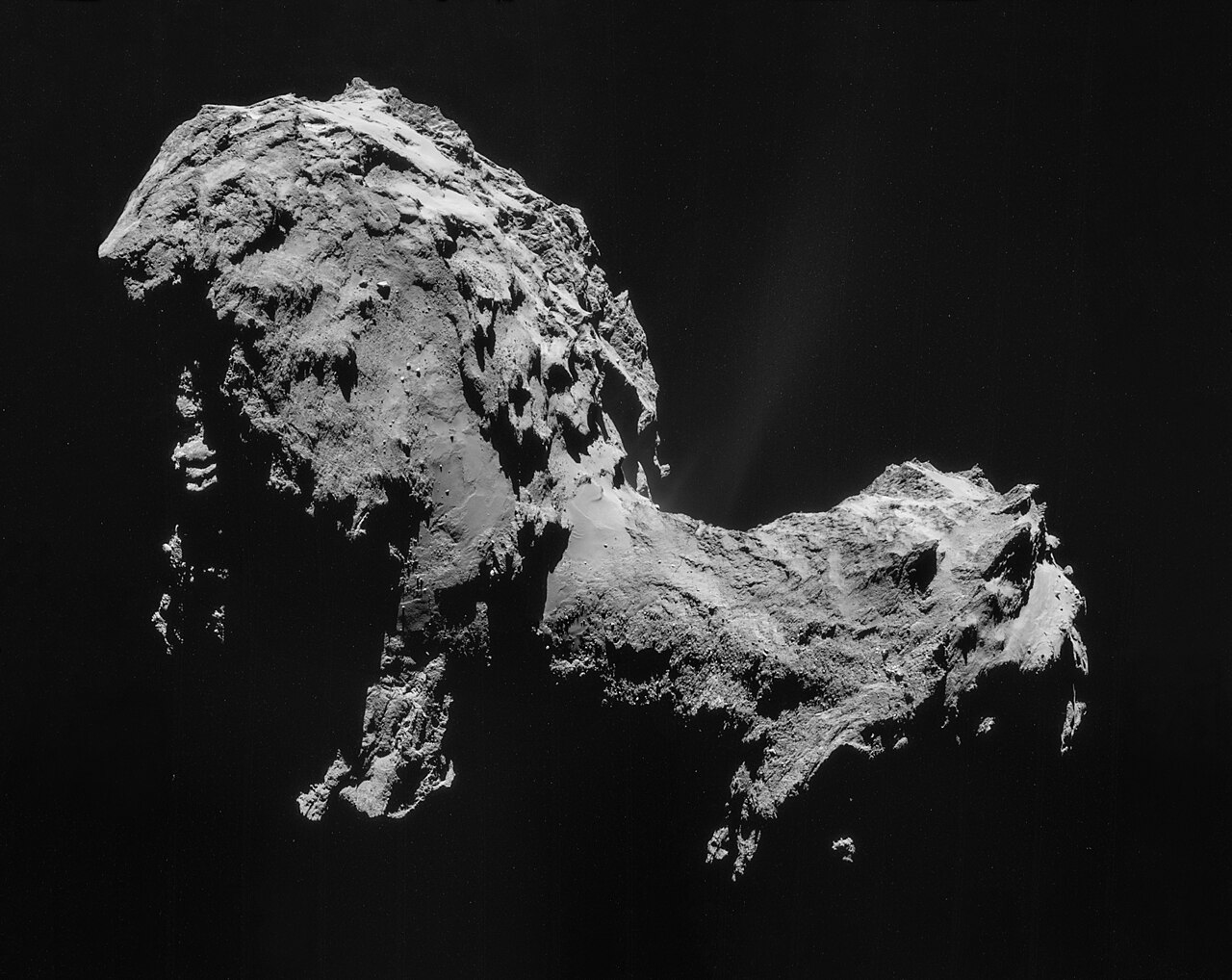
NASA has shared a stereo anaglyph (a picture that makes an object look three-dimensional when viewed with special colored glasses) of Churyumov-Gerasimenko, also known as Comet 67P.
The picture shows the comet's jagged nucleus (the solid center of a comet). The nucleus has two lobes, which are rounded parts that stick out. The larger lobe is around 4 kilometers in diameter, and the smaller lobe is 2.5 kilometers in diameter. The two lobes are joined by a narrow neck.
The stereo anaglyph was made by combining two images from the Rosetta spacecraft's narrow angle OSIRIS camera. The images were taken on July 25, 2015, from a distance of 184 kilometers.
At that time, numerous jets were coming out of the comet's active surface. This happened near the comet's closest approach to the Sun.
Rosetta's mission to the comet ended in September 2016. The spacecraft was commanded to make a controlled impact with the comet's surface.
According to NASA, a catalog of nearly 1,400 stereo anaglyphs created from Rosetta image data is available on a website. Anyone curious can explore the collection there.
More in Science

Ancient Japanese Populations Changed Differently After a Huge Volcanic Eruption
A new study led by Lund University finds that people in prehistoric Japan were affected in different ways after a volcano erupted about 7,300 years ago.
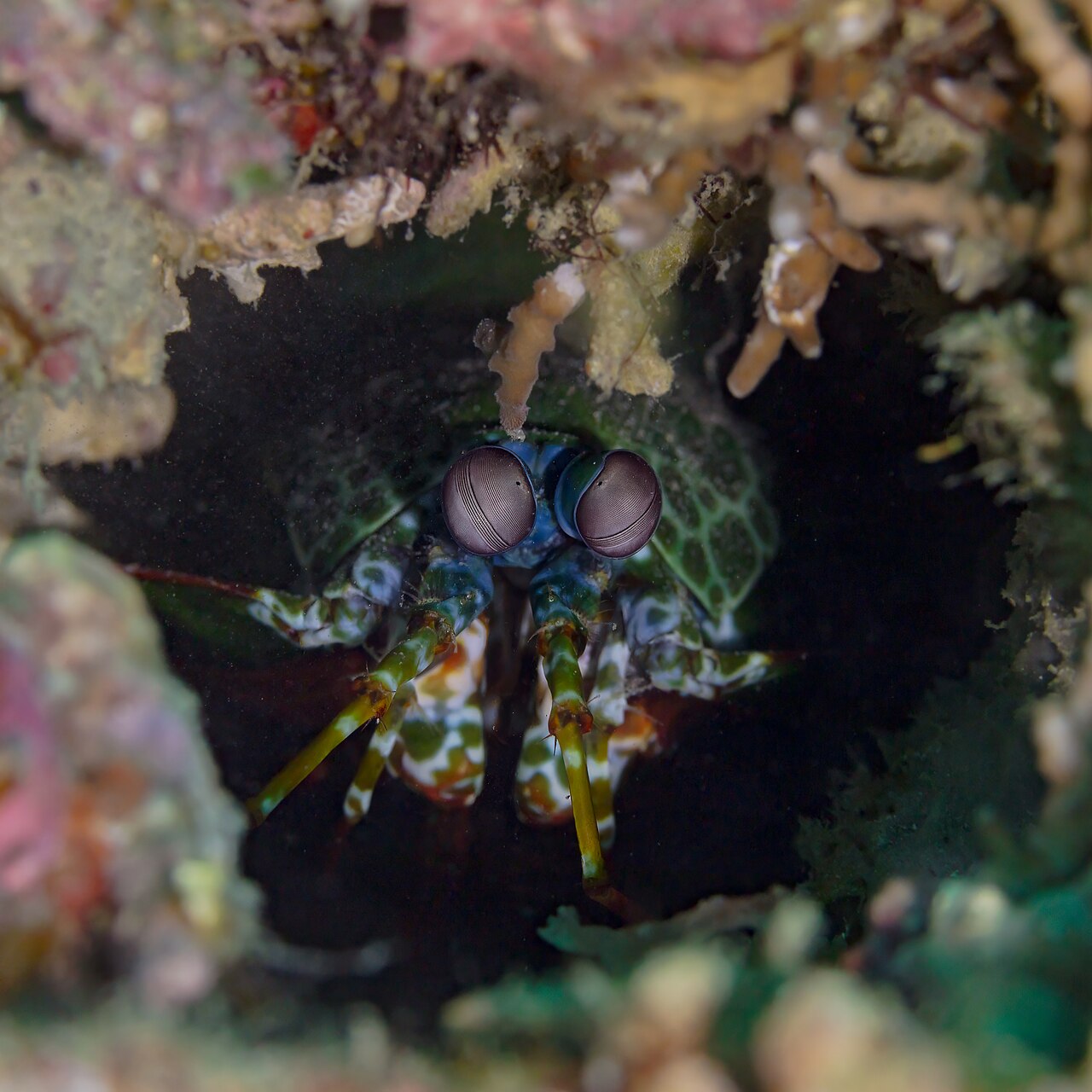
Mantis Shrimp Eyes Contain Pigments That Switch Back and Forth Like Light Switches
Scientists found that some of the animal's vision pigments see red light that few animals can detect.

A Study of 38,467 Songs Finds Lyrics Have Become Less Emotional
Michigan State University researchers looked at songs from 230 artists between 1947 and 2024.