
Earthquakes Caused Huge Waves on an Italian Lake Long Ago
New research using old records and computer simulations looks at how earthquakes once triggered deadly waves at Lake Iseo in northern Italy.
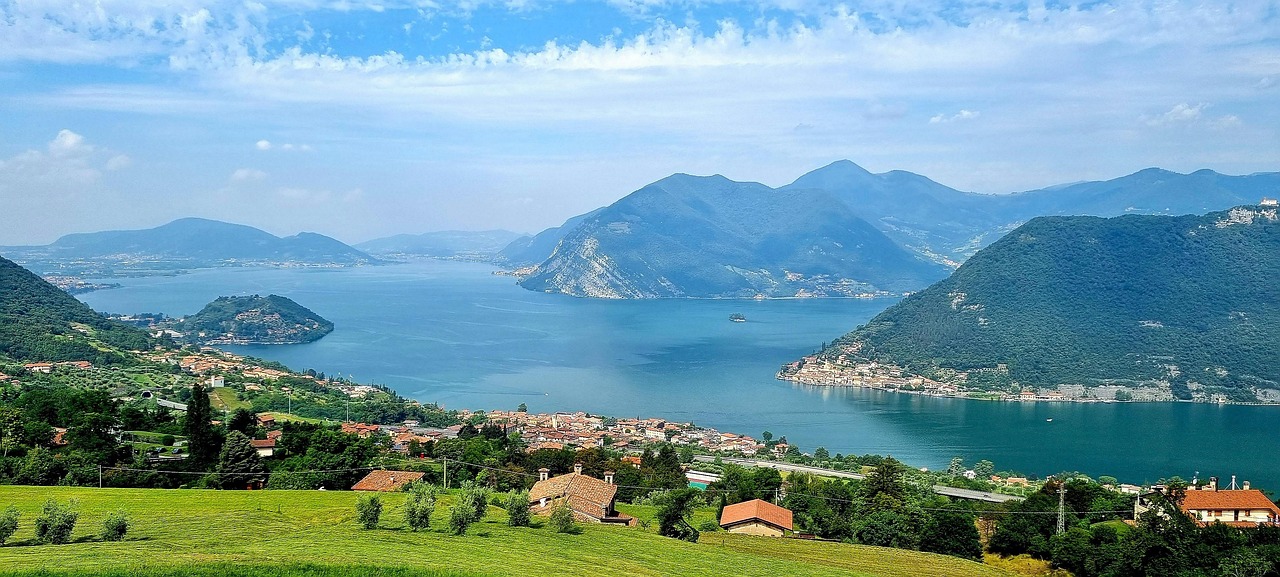
On January 3, 1117, a strong earthquake shook northern Italy. According to Phys.org, a 12th-century manuscript, which is kept today in the Vatican Library, recorded that the lakes rose so much that very few villagers escaped.
New research on this event was led by Muhammad Naveed Zafar, and the study was published in Nature Communications. According to Phys.org, the work focused on Lake Iseo, which lies at the foot of Val Camonica, one of the largest valleys of the southern Alps.
The Oglio river has built a large delta at the northern end of the lake. A delta is an area of land made of sediment (small bits of rock, sand and mud) that a river carries and leaves behind. According to Phys.org, since Roman times, forest clearing, farming and grazing have increased erosion (the wearing away of soil and rock) in the valley, tripling the sediment reaching the lake.
The delta had collapsed once before, in the sixth century. According to Phys.org, earthquakes in 1117 and on Christmas Day 1222 triggered delta collapses at Lake Iseo. The 1117 collapse moved about 62 million cubic meters of sediment, while the 1222 collapse moved about 10 million cubic meters.
According to Phys.org, computer simulations show what the 1117 event may have looked like. The wave reached the shores next to the delta within a minute and climbed about 50 meters there. It also flooded the low plain of the Oglio up to 2.7 kilometers inland.
At the town of Iseo, the water rose by about 5.5 meters 6 to 7 minutes after the 1117 collapse. According to Phys.org, the parish church of Sant'Andrea in Iseo was largely rebuilt soon after 1117. The 1222 collapse raised waves of about 13 meters.
According to Phys.org, cores taken from the Torbiere del Sebino peat bog show no tsunami deposit. Lake Iseo's shores are among the most densely built in the Italian Alps. Lakes Garda and Como show thick deep-basin layers suggesting medieval slope collapses, and the shores of the three lakes are home to more than 370,000 people. Denys Dutykh, an applied mathematician at Khalifa University of Science and Technology in Abu Dhabi, is also connected to this research.
More in World

New Open Database Brings Together Satellite Data on Water Vapor
Researchers have built a free database that combines 24 years of satellite measurements of water isotopes in the air.
Groundwater Use Near Borders Needs Careful Attention, Study Finds
A global analysis of shared underground water sources looks at where pumping tends to happen and why location matters.

New Study Suggests Voynich Manuscript Pages Were Bound Incorrectly
Researchers say the mysterious 15th-century book may have been meant to be read in a different order than it is now.